
Retreatment is necessary when bacteria have re-entered the tooth. This is usually due to decay or untreated canal areas. The patient may experience swelling or pain in chewing.
Sometimes a patient may have no symptoms, but an x-ray shows that there is a problem with a tooth that has previously undergone root canal therapy.
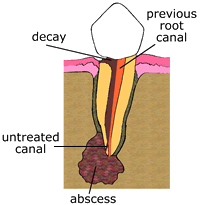
What Happens During Root Canal Retreatment?
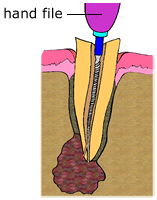
Step one:
After the tooth is “numbed”, the canal system will be reopened to remove the previous root canal material. This may involve removing a crown, post and core material. Sometimes we are able to make a small hole in the existing restoration and work through that opening. The canals are then thoroughly cleansed and shaped.
Step two:
The canals are refilled with a root canal filling and the opening is sealed with a sterile cotton pellet and a temporary filling.
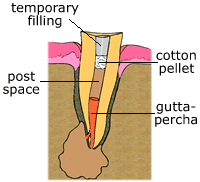

Step three:
The tooth should be restored within a couple of weeks. If your existing crown can be saved, then you will need to have it repaired. If you do not have a crown, it will probably be recommended.
With time, the surrounding bone will heal.